Critical system outages are inevitable. The difference between a minor disruption and a major business crisis often comes down to how well an organization is prepared to respond, and that response goes beyond just technical expertise. It depends on clearly defined service levels, documented incident response procedures, and a recovery plan that helps teams restore operations as quickly and efficiently as possible.
The First 15 Minutes Matter More Than You Think
Your website goes down. Customers can't log in. Phones start ringing.
The first 15 minutes of a major outage often determine whether it's remembered as a minor disruption or a business crisis. Yet many organizations discover during an incident that nobody is quite sure who owns the response, who should communicate with stakeholders, or how quickly systems can realistically be restored.
When critical systems fail, technology is only part of the problem. The real challenge is having a plan.
Most Outages Don't Fail Because of Technology
When people think about downtime, they usually focus on the technical issue itself:
- A website becomes unavailable
- An application crashes
- A cloud service experiences an outage
- A network connection fails
- A cybersecurity event disrupts operations
While these situations can certainly be complex, the technical problem is often only half the battle. The larger challenge is coordinating a response.
- Who is responsible for leading the incident?
- Who needs to be notified?
- How often should updates be provided?
- What systems are affected?
- How severe is the impact on the business?
Without clear answers, even relatively small issues can become prolonged disruptions.
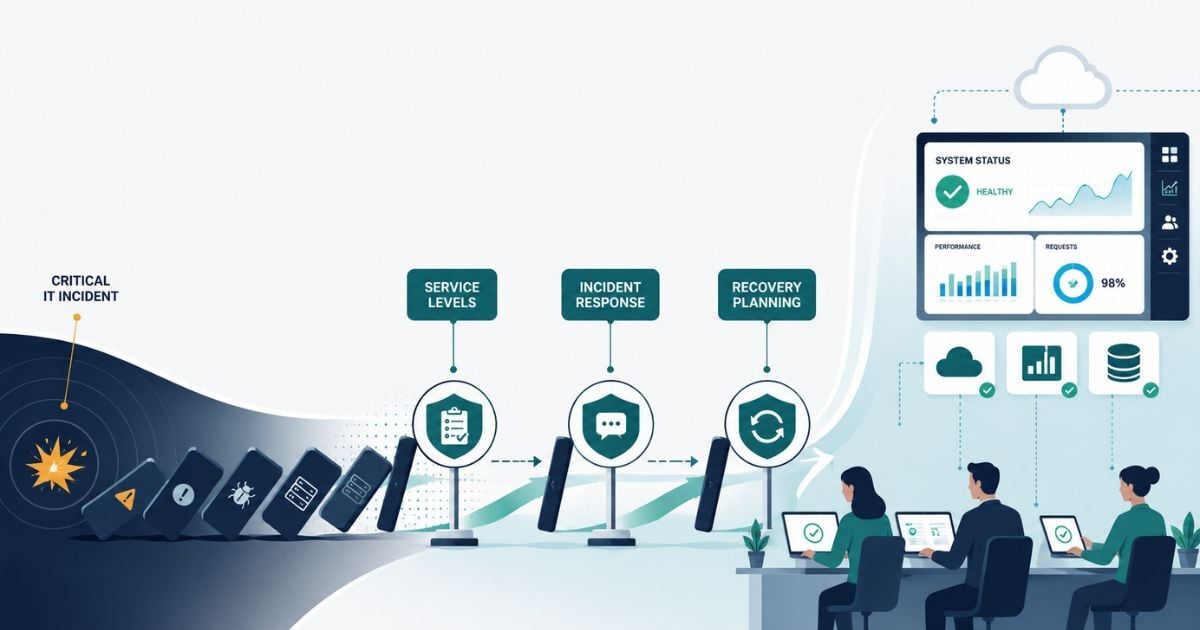
The Three Components of Effective Incident Management
Organizations that recover quickly from outages typically have three things in place before an incident occurs.
1. Defined Service Levels
A Service Level Agreement (SLA) establishes expectations around support and response. A well-designed SLA helps teams prioritize issues based on business impact rather than treating every request the same.
For example, a company-wide application outage should not receive the same level of urgency as a routine software request. Clear priorities help ensure critical issues receive immediate attention.
2. Incident Response Procedures
An SLA defines expectations. An incident response process defines actions. When a critical issue occurs, teams need a documented approach for:
- Classifying severity
- Escalating incidents
- Engaging technical resources
- Communicating with stakeholders
- Tracking progress toward resolution
The goal is not simply to fix the problem. The goal is to manage the situation in a predictable and organized way.
3. Recovery Planning
Eventually, every organization must answer an important question: If a critical system fails, how quickly can we recover?
Recovery planning helps establish realistic expectations around downtime, restoration procedures, backups, and business continuity. Without documented recovery objectives, organizations are often left making decisions during the most stressful moments of an outage.
Communication Is Often the Difference Between Trust and Frustration
One of the most common complaints during a service disruption is not the outage itself. It's the lack of communication. People can tolerate downtime better than uncertainty. When critical systems become unavailable, clarity around expectations can be just as important as the technical response itself.
When stakeholders understand:
- What happened
- What is being investigated
- What actions are underway
- When they can expect another update
they remain informed and confident that progress is being made. Even when a solution isn't immediately available, consistent communication helps maintain trust.
Preparation Creates Confidence
Organizations often invest heavily in technology but spend far less time defining how they will respond when that technology fails.
No organization can eliminate every outage, but the businesses that navigate those outages most successfully typically have three things in place before an incident occurs:
- Defined service levels that establish expectations
- Incident response procedures that define ownership and escalation
- Recovery plans that outline how systems will be restored
These elements work together. A Service Level Agreement defines the expected response. An Incident Response Plan defines the actions to take. A Disaster Recovery Plan defines how the organization recovers.
When one of those pieces is missing, outages become harder to manage. When all three are in place, teams can respond faster, communicate more effectively, and restore operations with less disruption.
How Gate 39 Helps Organizations Prepare
At Gate 39, we believe effective support is about more than responding to tickets. It requires clear service expectations, defined escalation procedures, proactive communication, and documented recovery planning.
Our managed services approach combines Service Level Agreements, incident management processes, infrastructure & application support, and disaster recovery planning to help organizations reduce operational risk and maintain business continuity.
Whether you're evaluating your current support model, reviewing incident response procedures, or developing a disaster recovery strategy, the goal remains the same: minimize disruption and restore normal operations as quickly as possible when critical systems are impacted.
Because when an outage occurs, preparation matters.
If you're evaluating your organization's incident response strategy or recovery planning, contact Gate 39 to learn how our managed services team can help you build a more resilient IT environment.
You might also be interested in:





.svg) Contact Us
Contact Us
.jpg)