Agriculture is technically a B2B industry, but marketing to an ag audience rarely feels like traditional B2B marketing.
The buying cycles are different, and the timing matters in ways that have very little to do with a standard marketing calendar. Relationships can span decades, market conditions can change the tone of a conversation overnight, and in many businesses, the person you have marketed to for years may now be making decisions alongside a son, daughter, or younger leadership team with very different expectations.
That combination creates a unique marketing challenge.
The strongest ag marketing strategies are built around a real understanding of how agricultural businesses operate, how decisions are made, and how trust is earned over time.
Trust Comes Before the Transaction
Agriculture is a relationship-driven industry. That sounds simple, but it has a major impact on how companies should approach marketing.
A producer, advisor, broker, agribusiness owner or agricultural executive is unlikely to make a decision based on one ad, one email or one social post. In many cases, they are evaluating more than the product or service itself. They are also evaluating the people behind it, and want to make sure you can answer these questions:
-
Do you understand their business?
-
Do you understand what is happening in the market?
-
Can you speak to the challenges they are actually dealing with?
-
Will you still be there next season?
That is why educational content tends to carry so much weight in ag marketing. Market commentary, research, planning resources, webinars, case studies, FAQs and practical insights all give an audience a reason to keep paying attention. The goal is to be useful long before someone is ready to buy.
Consistency matters too. Showing up regularly with relevant information creates familiarity, and familiarity helps build trust.
Timing Is Part of the Strategy
Most marketers are used to planning around campaigns, product launches, events and quarterly goals, but agricultural marketers have another layer to consider: timing.
The same message can perform very differently depending on when it reaches the audience.
A campaign may have strong creative, solid messaging and the right targeting, but if it reaches someone during the busiest week of harvest, it may simply be ignored. The reverse is also true. A well-timed piece of content can be incredibly effective because it arrives when the audience is already thinking about that issue.
This is where industry knowledge becomes especially valuable. Marketing teams need to understand the customer's calendar, not just their own.
There Is No Single "Ag Audience"
One of the easiest mistakes to make in agricultural marketing is treating agriculture as one audience.
It is not.
A grain producer has different priorities than a livestock producer. A commodity advisor has different needs than an agronomist. A small family operation may make decisions differently than a large commercial operation. A CFO at an agribusiness is looking at the business through a different lens than someone managing day-to-day production.
Geography matters. Commodities matter. Operation size matters. Role matters. Experience matters.
The more specific the audience becomes, the better the messaging usually gets. That does not mean every company needs dozens of highly detailed customer personas. It does mean marketers should understand who they are speaking to and why that person should care.
Generational Succession Changes the Conversation
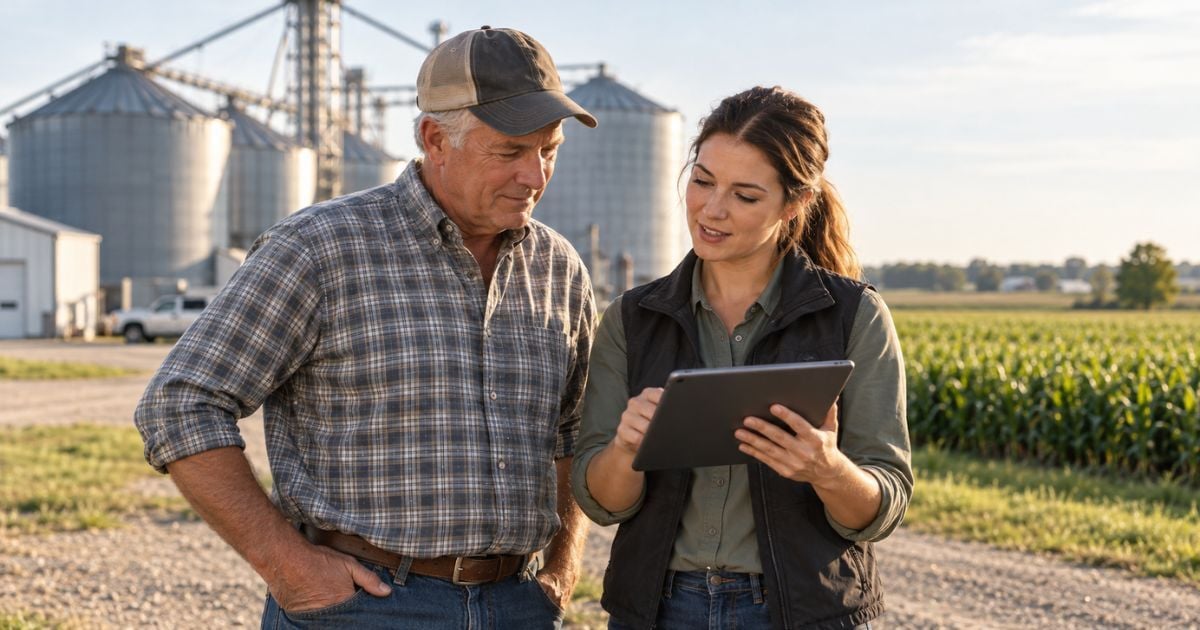
Generational succession adds another layer to ag marketing that many industries do not face in quite the same way. In many agricultural businesses, leadership and decision-making are gradually moving from one generation to the next. Sometimes that transition is formal, sometimes it happens slowly over several years. Oftentimes, both generations remain involved in major decisions.
That means marketers may be speaking to two very different audiences at the same time.
One may value long-standing relationships, proven experience and a track record of reliability. The next generation may place more weight on digital tools, data accessibility, speed, convenience and transparency.
Neither perspective is wrong. The challenge is creating messaging that respects both.
A company that changes its voice too aggressively in an effort to appear modern may create distance with longtime customers. And on the flip side, a company that never evolves may struggle to connect with younger decision makers stepping into leadership roles.
The common ground usually comes back to the fundamentals:
The message can stay rooted in those shared priorities while the delivery changes based on audience, channel and stage in the buying process.
Digital Matters, but the Channel Mix Matters More
Agricultural audiences are already digital. They use email, search, social media, mobile tools, webinars, online research and industry websites just like every other business. The more interesting question is how those digital channels work alongside the traditional relationship-driven parts of the industry.
A prospect may first hear about a company at a trade show, read a market update a few weeks later, attend a webinar, visit the website several times and then finally have a conversation with someone on the sales team.
That journey may take weeks or months.
That's where good marketing makes those touchpoints feel connected and where a strong CRM and thoughtful marketing automation become especially valuable. The technology is there to support the relationship, not replace it.
Useful Content Wins
Ag audiences generally have very little patience for marketing that does not provide value. That makes content strategy especially important.
For some companies, valuable content may include market commentary or research. For others, it may be planning resources, calculators, seasonal checklists, webinars, product education or customer stories.
The format will vary, but the principle stays the same: give people a reason to keep paying attention.
An email that consistently provides useful information becomes something people expect. A webinar that teaches rather than pitches builds credibility. A resource that saves someone time can be more memorable than a polished ad campaign.
Strong content also gives sales teams something meaningful to share with prospects and customers. That can be especially helpful during long buying cycles when there may not be an immediate reason for a sales conversation.
Marketing and Sales Need to Stay Connected
In ag, marketing rarely works well in isolation since relationships still matter too much.
Marketing should make sales conversations easier. It should help identify interest, provide useful context and create opportunities for follow-up.
That may include tracking which topics a prospect engages with, building segmented email lists, nurturing leads over time or giving sales teams visibility into website and campaign activity.
A strong marketing program should help answer questions such as:
-
Who is paying attention?
-
What are they interested in?
-
Where are they in the decision process?
-
What information would be most useful next?
When marketing and sales share that information, conversations become more relevant.
Measure More Than Activity
Ag marketing can be difficult to measure if success is defined too narrowly. Clicks, impressions and website traffic are useful indicators, but they rarely tell the whole story. In industries with long sales cycles and relationship-based selling, progress may show up gradually.
Someone reads several articles. They attend a webinar. They open market updates for six months. Then they finally request a conversation. That does not mean the previous six months of marketing failed. It means the buying process took six months.
Marketing teams should look at the full picture:
-
Traffic
-
Engagement
-
Qualified leads
-
Sales conversations
-
Opportunities
-
Customer acquisition
-
Retention
Over time, those numbers help show which activities are actually contributing to business growth.
Good Ag Marketing Starts With Understanding the Business
Agricultural marketing requires patience, timing and a genuine understanding of the audience. The companies that do it well tend to know their customers deeply. They understand when those customers are making decisions, what pressures they are dealing with and what information they need along the way.
They also recognize that the audience itself is changing. The companies that stay relevant will be the ones that can evolve without losing the trust they have already built.
At Gate 39, we work with agricultural firms to connect content, technology and data so marketing supports the way their customers actually make decisions.
Ready to strengthen your agricultural marketing? Contact us to discuss how the right strategy can support your business goals.
You might also be interested in:





.svg) Contact Us
Contact Us
.jpg)